Video: Marcus Jansen, Power Structures, Almine Rech, Paris, France, 2021


FRIEZE Los Angeles
Almine Rech Booth E11Featuring works by Farah Atassi, Brian Calvin, George Condo, Xavier Daniels, Sasha Ferré, Daniel Gibson, Peter Halley, Federico Herrero, Marcus Jansen, Alexandre Lenoir, Inès Longevial, Sam McKinniss, Gwen O'Neil,
Sylvia Ong, Otis Kwame Kye Quaicoe, Nathaniel Mary Quinn, Umar Rashid, Ryan Schneider, Vaughn Spann, Emma Stern, Tursic & Mille, and Chloe Wise
Almine Rech Booth E11Featuring works by Farah Atassi, Brian Calvin, George Condo, Xavier Daniels, Sasha Ferré, Daniel Gibson, Peter Halley, Federico Herrero, Marcus Jansen, Alexandre Lenoir, Inès Longevial, Sam McKinniss, Gwen O'Neil,
Sylvia Ong, Otis Kwame Kye Quaicoe, Nathaniel Mary Quinn, Umar Rashid, Ryan Schneider, Vaughn Spann, Emma Stern, Tursic & Mille, and Chloe Wise
2024


"Selections form the Collection," Artis—Naples, The Baker Museum
Gift of Elie Ballas, Joseph Edery and Morris Missry, 2022.9.1
Marcus Jansen (American, b. 1968), Behind Walls #3, 2019. Oil enamel, oil stick, spray paint and collage on canvas
Exhibition runs through, April. 28.2024.
Gift of Elie Ballas, Joseph Edery and Morris Missry, 2022.9.1
Marcus Jansen (American, b. 1968), Behind Walls #3, 2019. Oil enamel, oil stick, spray paint and collage on canvas
Exhibition runs through, April. 28.2024.
2023


Marcus Jansen
In the Land of Silhouettes, Mar 17 — Apr 29, 2023 | Shanghai
Almine Rech, Shanghai
Almine Rech Shanghai is pleased to present In the Land of Silhouettes, a solo exhibition by Marcus Jansen and also his third exhibition with the gallery, on view from March 17 through April 29, 2023. The first solo exhibition of Jansen’s work in China,
In the Land of Silhouettes showcases a new series of works in the artist’s unique hybrid style, which fuses aspects of gestural abstraction and graffiti writing into dynamic and surreal narratives.
In the Land of Silhouettes, Mar 17 — Apr 29, 2023 | Shanghai
Almine Rech, Shanghai
Almine Rech Shanghai is pleased to present In the Land of Silhouettes, a solo exhibition by Marcus Jansen and also his third exhibition with the gallery, on view from March 17 through April 29, 2023. The first solo exhibition of Jansen’s work in China,
In the Land of Silhouettes showcases a new series of works in the artist’s unique hybrid style, which fuses aspects of gestural abstraction and graffiti writing into dynamic and surreal narratives.
2022


Almine Rech, Installation
Art Basel Hong Kong, 2022
Art Basel Hong Kong, 2022
2022
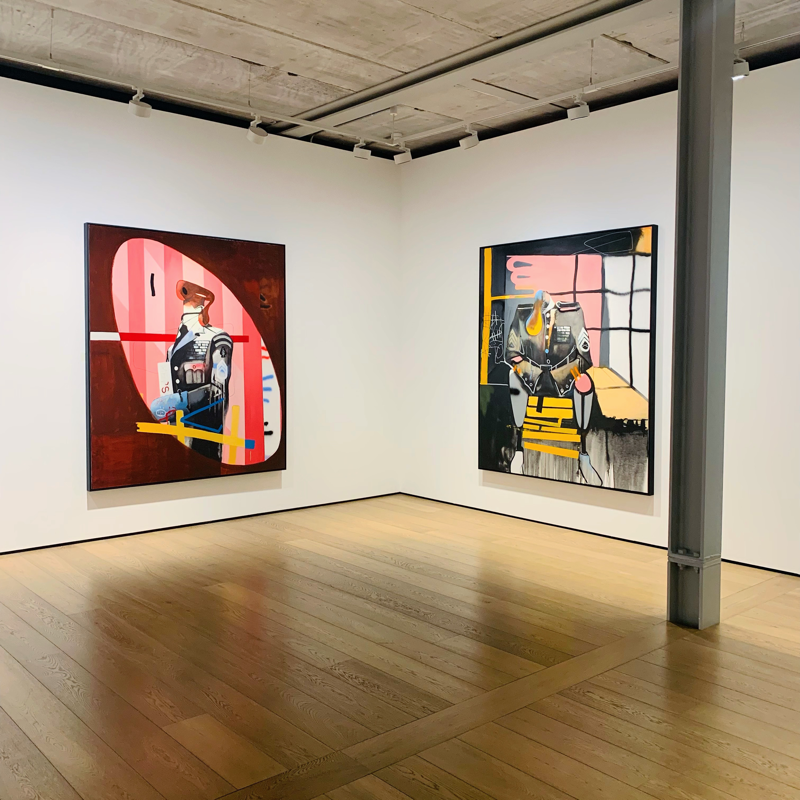

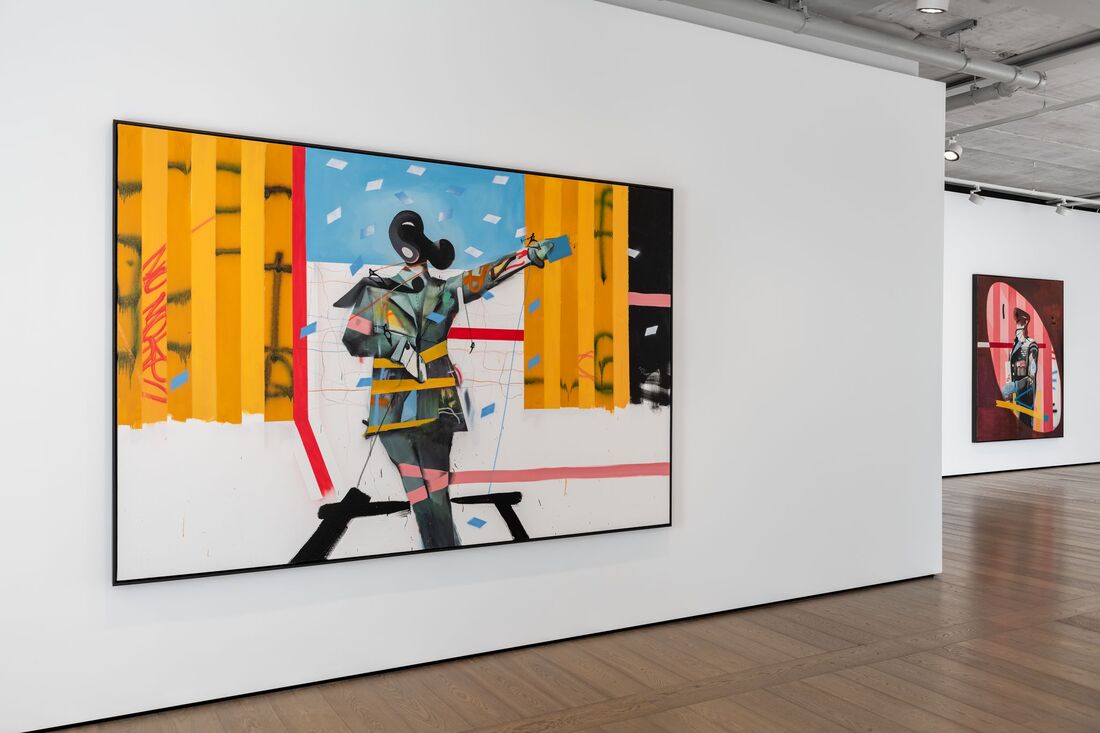

Marcus Jansen
Victims and Victors, Jan 13 — Feb 19, 2022 | London
Almine Rech London is pleased to present its first solo exhibition of American artist Marcus Jansen, on view from January 13 until February 19, 2022. This will be Marcus Jansen's second solo exhibition with Almine Rech. Each year, at 11 am on 11 November, the world falls silent to remember those who lost their lives in the battlefields of World War I. The so-called Great War was meant to be the war to end all wars, but since then, countless other conflicts have unleashed their horror and despair across the globe. Again and again, governments insist that the best way to resolve an argument is to kill. How to disrupt this terrible cycle of violence? Art is one way.
Victims and Victors, Jan 13 — Feb 19, 2022 | London
Almine Rech London is pleased to present its first solo exhibition of American artist Marcus Jansen, on view from January 13 until February 19, 2022. This will be Marcus Jansen's second solo exhibition with Almine Rech. Each year, at 11 am on 11 November, the world falls silent to remember those who lost their lives in the battlefields of World War I. The so-called Great War was meant to be the war to end all wars, but since then, countless other conflicts have unleashed their horror and despair across the globe. Again and again, governments insist that the best way to resolve an argument is to kill. How to disrupt this terrible cycle of violence? Art is one way.
2021
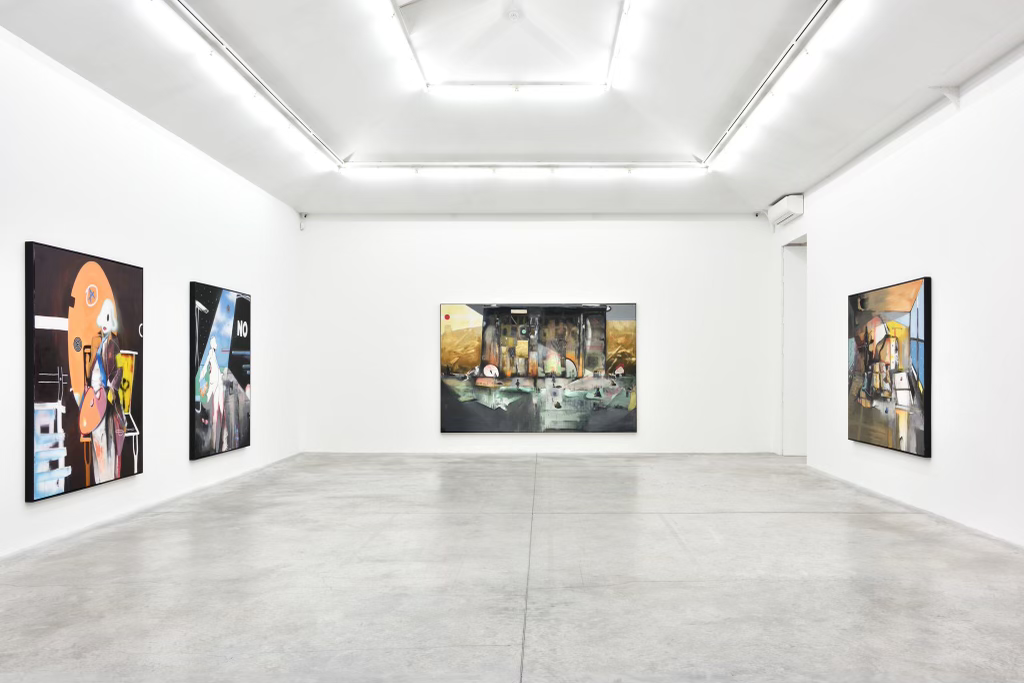
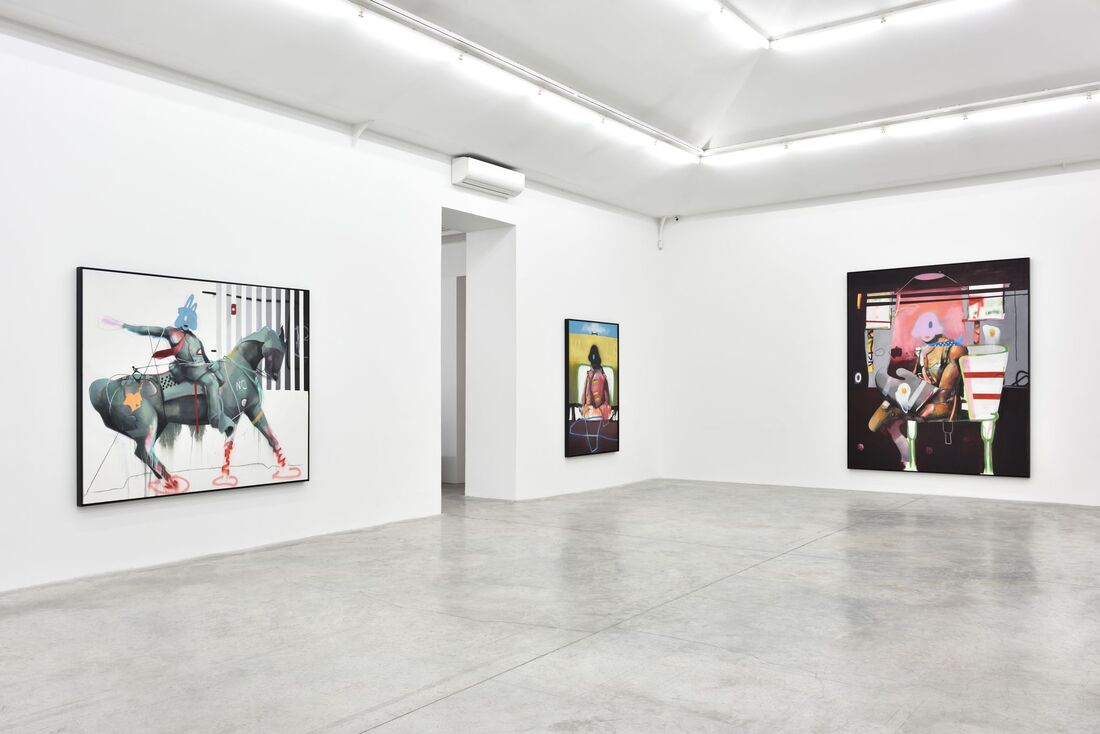
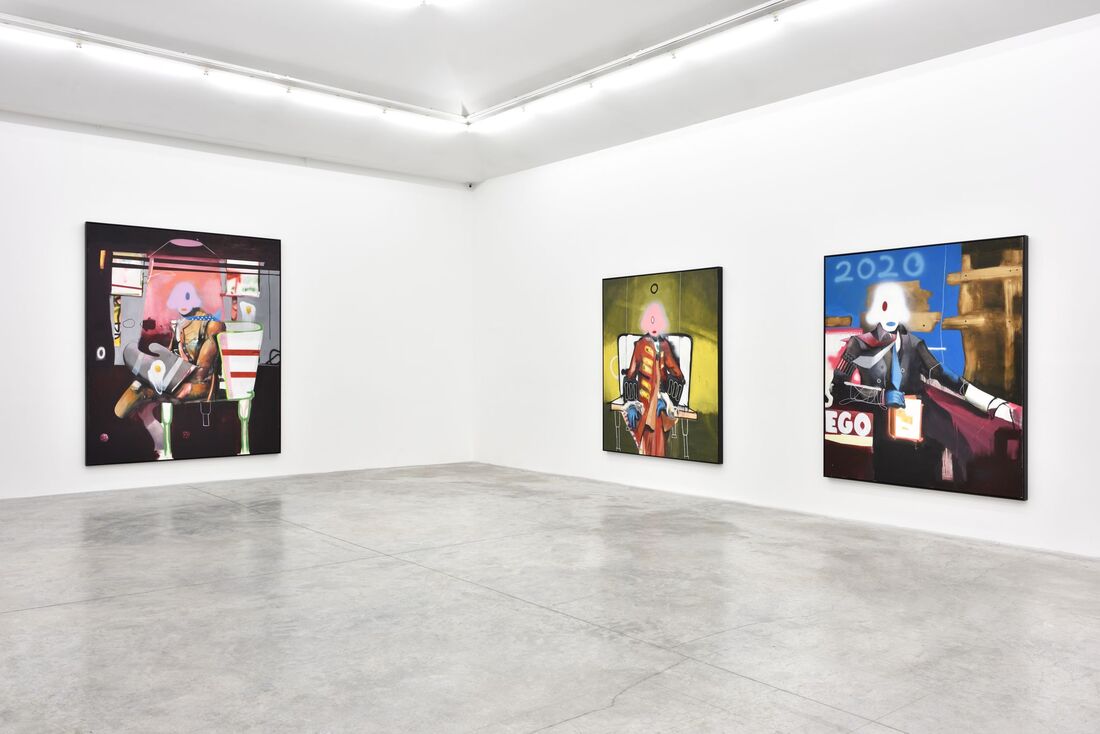

Marcus Jansen
Power Structures, Jan 16 — Feb 27, 2021 | Paris, Turenne
Any discussion of Marcus Jansen’s work would be invalid as long as there is no mention of his intense life journey, the circumstances that influenced the way he is experiencing the world, and the way he conveys his emotions and concerns into his art. Jansen’s childhood years in the Bronx and Queens (New York) in the 1970s were in stark contrast to his adolescent years in Monchengladbach, Germany, where he went to art school and was exposed to European culture and lifestyle. After serving eight years in the US military and getting a first-hand experience of some of the most devastating and crucial events of the 20th century, he went back to his genuine love for art and used it as a channel for his thoughts, worries, fears, and emotions. This complexity of influences directly impacts his creative output, which consists of compounded storytelling images constructed in an abstracted or surreal setting and filled in with familiar iconography.
Power Structures, Jan 16 — Feb 27, 2021 | Paris, Turenne
Any discussion of Marcus Jansen’s work would be invalid as long as there is no mention of his intense life journey, the circumstances that influenced the way he is experiencing the world, and the way he conveys his emotions and concerns into his art. Jansen’s childhood years in the Bronx and Queens (New York) in the 1970s were in stark contrast to his adolescent years in Monchengladbach, Germany, where he went to art school and was exposed to European culture and lifestyle. After serving eight years in the US military and getting a first-hand experience of some of the most devastating and crucial events of the 20th century, he went back to his genuine love for art and used it as a channel for his thoughts, worries, fears, and emotions. This complexity of influences directly impacts his creative output, which consists of compounded storytelling images constructed in an abstracted or surreal setting and filled in with familiar iconography.
2021


Marcus Jansen
Two Decades of Relevance, Apr 24 — Jul 25, 2021 | The Baker Museum, FL
Jansen’s works are so arresting, in fact, that it becomes impossible to look away. Such transfixing dystopian universes both respond to, and further difficult conversations surrounding issues of social justice. The artist draws on his past to piece together expressive and urgent works which reflect not only his own traumas but also those of the collective human experience. Various human and animalistic figures exist together on Jansen’s canvas’, collapsing and molding into each other. These beautiful blurs of narrative also seem to parallel the often impenetrable trajectory of human memory and experience. Jansen’s work has been shown around the world at established galleries and museums. An especially complex and fascinating body of Jansen’s work is currently on view at The Baker Museum in Naples. The exhibition, entitled Two Decades of Relevance is on until 25th, July 2021— see video at the bottom of this page for a sneak preview. I was lucky enough to chat with Marcus about this show and about his artistic process as a whole. - FAD Magazine
Two Decades of Relevance, Apr 24 — Jul 25, 2021 | The Baker Museum, FL
Jansen’s works are so arresting, in fact, that it becomes impossible to look away. Such transfixing dystopian universes both respond to, and further difficult conversations surrounding issues of social justice. The artist draws on his past to piece together expressive and urgent works which reflect not only his own traumas but also those of the collective human experience. Various human and animalistic figures exist together on Jansen’s canvas’, collapsing and molding into each other. These beautiful blurs of narrative also seem to parallel the often impenetrable trajectory of human memory and experience. Jansen’s work has been shown around the world at established galleries and museums. An especially complex and fascinating body of Jansen’s work is currently on view at The Baker Museum in Naples. The exhibition, entitled Two Decades of Relevance is on until 25th, July 2021— see video at the bottom of this page for a sneak preview. I was lucky enough to chat with Marcus about this show and about his artistic process as a whole. - FAD Magazine


Salon de PeintureApr 29 — Jun 5, 2021 | New York, Upper East Side
Almine Rech’s own Salon de Peinture walks away from that mundane longing for spectacularity and revisits the idea of Salon. By narrowing down again the focus to painting, the gallery salon emulates the vitality of nineteenth- and early twentieth-century French Salons (the Salon des Refusés, des Indépendants, d’Automne and so forth). It should be noted that a Salon is not a group show per se: it is not curated and does not historicize the now in the fashion characteristic of contemporary art museums and curators. As such, it is more of an innocent conversation with which an array of living artists engage. Painters based in France, the United States, Ireland, Britain, Germany, and China are part of the discussion Almine Rech has initiated. Salon de Peinture moreover instigates yet another conversation: a dialogue with painting of the past.
Almine Rech’s own Salon de Peinture walks away from that mundane longing for spectacularity and revisits the idea of Salon. By narrowing down again the focus to painting, the gallery salon emulates the vitality of nineteenth- and early twentieth-century French Salons (the Salon des Refusés, des Indépendants, d’Automne and so forth). It should be noted that a Salon is not a group show per se: it is not curated and does not historicize the now in the fashion characteristic of contemporary art museums and curators. As such, it is more of an innocent conversation with which an array of living artists engage. Painters based in France, the United States, Ireland, Britain, Germany, and China are part of the discussion Almine Rech has initiated. Salon de Peinture moreover instigates yet another conversation: a dialogue with painting of the past.
2021


Marcus Jansen, Future Fairs, Solo booth
Richard Beavers Gallery, New York, New York
Other highlights include Richard Beavers Gallery, from Bed-Stuy, continuing its rise with a magisterial presentation (with Ilèkùn Wa) of paintings by Marcus Jansen that address financial predation in the South Bronx. - New York Times
Richard Beavers Gallery, New York, New York
Other highlights include Richard Beavers Gallery, from Bed-Stuy, continuing its rise with a magisterial presentation (with Ilèkùn Wa) of paintings by Marcus Jansen that address financial predation in the South Bronx. - New York Times
2021


Marcus Jansen
Art Paris Solo Booth
Almine Rech, Paris
Art Paris Solo Booth
Almine Rech, Paris
2020


Marcus Jansen
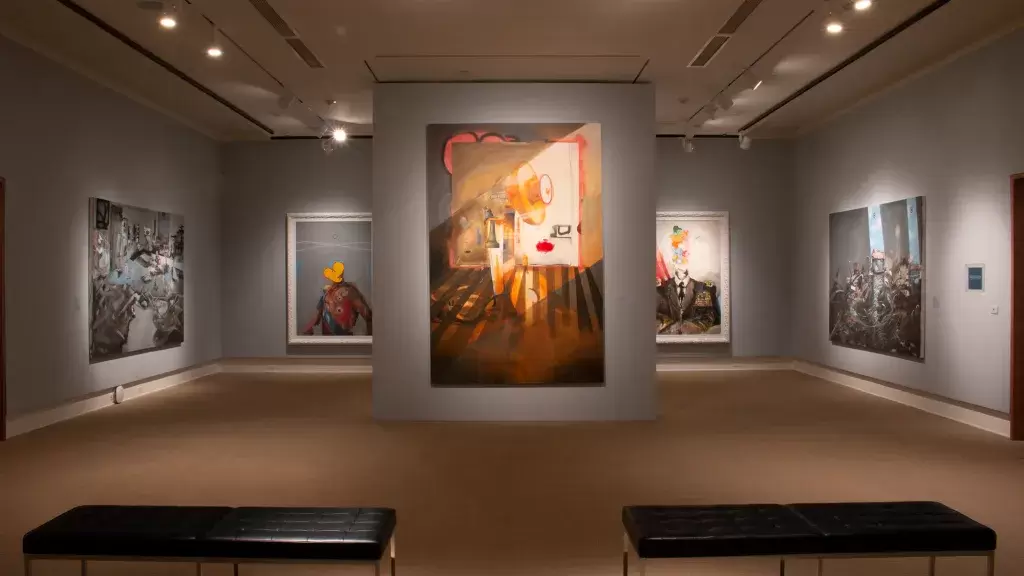
E Pluribus Unum, Sep 18, 2020 — Jan 3, 2021 | Rollins Museum of Art, Winter Park, Florida, US
“The title E Pluribus Unum addresses one of the core philosophies of the 21st century regarding the direction we will choose and the elements that stand in our way,” Jansen tells us. “The paintings reflect several global questions and concerns about our current political climate while highlighting emerging and sometimes fictitious threats that influence our beliefs. That includes increasing surveillance, deciding who writes our history, military conflicts, rising walls, economic inequality and the use of propaganda as a means of oppression. These elements will all influence the direction of human civilization.” Jansen hopes to encourage people to reconsider the influences they accept and consider the alternatives.
E Pluribus Unum, Sep 18, 2020 — Jan 3, 2021 | Rollins Museum of Art, Winter Park, Florida, US
“The title E Pluribus Unum addresses one of the core philosophies of the 21st century regarding the direction we will choose and the elements that stand in our way,” Jansen tells us. “The paintings reflect several global questions and concerns about our current political climate while highlighting emerging and sometimes fictitious threats that influence our beliefs. That includes increasing surveillance, deciding who writes our history, military conflicts, rising walls, economic inequality and the use of propaganda as a means of oppression. These elements will all influence the direction of human civilization.” Jansen hopes to encourage people to reconsider the influences they accept and consider the alternatives.
2019


Marcus Jansen, RECON
Galerie AMART, Vienna, Austria
Galerie AMART, Vienna, Austria
2019


Marcus Jansen
Stop, Look and Listen,
Galerie Danysz, Paris France
Stop, Look and Listen,
Galerie Danysz, Paris France
2019


Marcus Jansen at Big Arts
Sanibel Island, Florida
Sanibel Island, Florida
2018


Casterline Goodman Gallery - Expo Chicago
Now and Then
Now and Then
2018


Kemper Museum of Contemporary Art, Deconstructing Marcus Jansen, 2018
Jansen’s mixed-media work such as Streets (2008) was inspired by Romare Bearden and Robert Rauschenberg’s use of collage and found objects. The nearly monochromatic scene in Empty Plates (2007) parallels photographs by Robert Farber with its use of gradient color,
while details found in the corner of the painting pay homage to Abstract Expressionists like Willem de Kooning—another of Jansen’s inspirations. In both Streets and Empty Plates, Jansen employs a central line to divide the composition, a technique also seen in John Steuart Curry’s Fire Diver (1934) featured in this exhibition.
By including Jansen’s artistic influences and contemporaries, this exhibition highlights the visual, technical, and thematic correlations among them.
Jansen’s mixed-media work such as Streets (2008) was inspired by Romare Bearden and Robert Rauschenberg’s use of collage and found objects. The nearly monochromatic scene in Empty Plates (2007) parallels photographs by Robert Farber with its use of gradient color,
while details found in the corner of the painting pay homage to Abstract Expressionists like Willem de Kooning—another of Jansen’s inspirations. In both Streets and Empty Plates, Jansen employs a central line to divide the composition, a technique also seen in John Steuart Curry’s Fire Diver (1934) featured in this exhibition.
By including Jansen’s artistic influences and contemporaries, this exhibition highlights the visual, technical, and thematic correlations among them.
2018


Marcus Jansen
New Horizons. Mit den Waffen der Malerei
Museum Zitadelle in Berlin from February 10th until April 15th, 2018.
Marcus Jansen is a bright shining star in the art world today. Dedicated to exploring the human condition, he is often referred to as a cartographer of conflict and was recently noted as “the innovator of Urban Expressionism” by the former Director of the American Vanguard Exhibitions 1961 at the MoMA, Jerome A. Donson, as well as “one of the most important American painters of his generation” by Documenta Kassel curator 1977 and 1987 Prof Dr Manfred Schneckenburger in Munich. Indeed, one of the most exciting new painters to emerge at the late 20th century, Jansen has created an impressive international following. The Museum Zitadelle will soon host the first-ever survey of the acclaimed painter’s work in Germany. Created in collaboration with the international workgroup of Curatorial Partners and titled Marcus Jansen – New Horizons. Mit den Waffen der Malerei (With the weapons of painting), the exhibition will celebrate his three decades in the arts only a few months before his 50th birthday.
New Horizons. Mit den Waffen der Malerei
Museum Zitadelle in Berlin from February 10th until April 15th, 2018.
Marcus Jansen is a bright shining star in the art world today. Dedicated to exploring the human condition, he is often referred to as a cartographer of conflict and was recently noted as “the innovator of Urban Expressionism” by the former Director of the American Vanguard Exhibitions 1961 at the MoMA, Jerome A. Donson, as well as “one of the most important American painters of his generation” by Documenta Kassel curator 1977 and 1987 Prof Dr Manfred Schneckenburger in Munich. Indeed, one of the most exciting new painters to emerge at the late 20th century, Jansen has created an impressive international following. The Museum Zitadelle will soon host the first-ever survey of the acclaimed painter’s work in Germany. Created in collaboration with the international workgroup of Curatorial Partners and titled Marcus Jansen – New Horizons. Mit den Waffen der Malerei (With the weapons of painting), the exhibition will celebrate his three decades in the arts only a few months before his 50th birthday.
2017


Traunstein Kirche, Traisntein World Tour Exhibition curated by Dr Elmar Zorn, Germany
2017


2017


2017


2016


Marcus Jansen, DECADE
La Triennale Di Milano Museum, Milan, Italy
Decade is the first Italian solo exhibition by Marcus Jansen ( New York , 1968) , the American artist who has touched different levels of productivity. Jansen started painting very young and developed the Expressionist style, that's instinctive and very recognizable, he began gradually addressing more complex issues such as war, the human being and his society.
La Triennale Di Milano Museum, Milan, Italy
Decade is the first Italian solo exhibition by Marcus Jansen ( New York , 1968) , the American artist who has touched different levels of productivity. Jansen started painting very young and developed the Expressionist style, that's instinctive and very recognizable, he began gradually addressing more complex issues such as war, the human being and his society.
2014


2014


Museum Pinacoteca Benedito Calixto
Marcus Jansen, São Paulo, Brazil
Marcus Jansen, São Paulo, Brazil
2012


Marcus Jansen Installation at studio location UNIT A
2007


Marcus Jansen, Urban Expressionism
Yeiser Art Center, Kentucky
Yeiser Art Center, Kentucky